Artist Financing Is Turning Into Creator Infrastructure
A lot of the music-tech conversation still treats artist financing as a separate category.
There are creator tools over here. Streaming over there. Direct-to-fan somewhere else. Then financing sits off to the side like a specialist niche for a handful of catalog companies, advance platforms, and investors who enjoy spreadsheets more than songs.
That distinction is getting harder to defend.
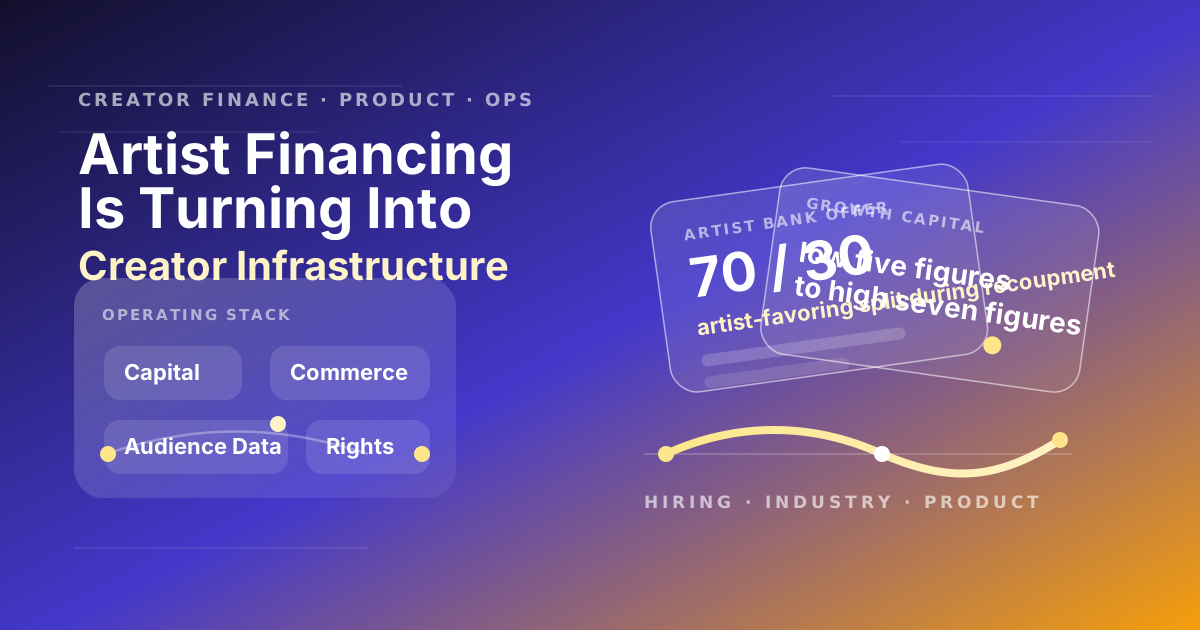
OpenWav’s new Artist Bank is a useful signal that artist financing is starting to merge with the broader creator infrastructure stack. This is not just about offering artists money. It is about combining capital with commerce, audience ownership, analytics, release strategy, and direct-to-fan workflow.
That matters because once financing becomes part of the product layer, it creates a different kind of music-tech opportunity — and a different kind of hiring story.
The OpenWav move is bigger than an advance product
OpenWav, the direct-to-fan platform co-founded by Wyclef Jean and Jaeson Ma, launched OpenWav Artist Bank in partnership with Snafu Records. The program offers qualifying independent artists cash advances against their streaming royalties, with terms designed to let them access growth capital without giving up ownership in the traditional label-advance sense.
According to Ma, artists earning more than $8,000 in annual streaming royalties can qualify, and advances can range from the low five figures to the high seven figures. OpenWav says the model includes a 70/30 split in the artist’s favor during the recoupment period, with OpenWav collecting 30% of streaming royalties until the advance is repaid.
That is interesting on its own. But the bigger signal is how OpenWav is positioning the product.
This is not being framed as a standalone loan-like offering dropped into the market for financial engineering points. It is being integrated into a wider operating system built around:
- direct-to-fan commerce
- owned audience data
- merch and ticketing
- exclusive content
- pre-release fan windows
- analytics and audience development
That is the shift worth paying attention to.
Financing is becoming a feature of the creator stack
For years, artist financing platforms mostly sat adjacent to the music product ecosystem. They solved a real problem, but they often looked like specialist tools layered onto the side of a fragmented artist career.
Now the category is getting pulled inward.
When a platform combines:
- capital access
- fan monetization
- data visibility
- release tools
- owned channels
- recurring commerce
…it stops looking like pure financing and starts looking like creator infrastructure.
That is a much more interesting category.
The simple version is this: artists do not just need money. They need money that connects to a system that helps them grow.
A financing product with no meaningful insight into audience, catalog performance, release timing, or monetization behavior is one thing. A financing layer embedded inside a creator operating system is something else entirely.
Why this is a music-tech jobs story
Whenever money and software get integrated more tightly, new work appears.
Not just in finance. Across product, ops, data, risk, and creator support.
That is why this trend matters for MTJ readers.
If artist financing keeps converging with direct-to-fan tooling, it creates or expands demand across several lanes.
1. Product roles for creator capital tools
Someone has to design the user experience around how artists apply, qualify, review offers, and understand repayment terms.
That creates work for product managers and product designers who can operate in a messy, high-trust environment where finance, creator psychology, and music-business reality all collide.
These are not generic fintech flows. Artists think about money, rights, and career upside differently than a typical SaaS customer.
2. Risk and underwriting infrastructure
If companies are advancing money against streaming royalties, they need systems to evaluate catalog reliability, earnings history, volatility, recoupment probability, and fraud risk.
That creates roles around:
- risk modeling
- underwriting operations
- revenue forecasting
- catalog analysis
- fraud and anomaly review
- data science tied to royalty patterns
This is a good example of music tech absorbing more logic from fintech and alternative credit markets.
3. Creator operations and support
The more complex the offering, the more important the human layer becomes.
Artists will need help understanding:
- eligibility
- deal structure
- repayment logic
- which rights are affected
- how financing connects to releases, fan campaigns, and future revenue
That creates room for creator success, artist support, and operations teams that can explain complicated products without sounding like a legal department wrapped in a chatbot.
4. Analytics and revenue intelligence
OpenWav is not only about advances. It is part of a broader system tied to audience development and direct monetization.
That means analytics becomes central.
You cannot build smart artist financing products without understanding:
- streaming history
- release cadence
- geographic traction
- conversion behavior
- fan monetization potential
- catalog concentration risk
This makes data and insights roles more important, not less. The better the platform understands creator economics, the better it can price risk and design useful products.
5. Rights and catalog operations
Any product that touches artist earnings, advances, and recoupment logic also touches rights, reporting, and payout accuracy.
That creates jobs across:
- royalty operations
- rights administration
- metadata and catalog QA
- payout and reconciliation systems
- finance operations for creator platforms
Again, not glamorous. Also increasingly strategic.
The indie artist business is becoming more software-defined
There is a broader pattern here.
Independent artists are increasingly expected to behave like small media companies.
They are supposed to:
- build audiences
- manage merch
- understand data
- coordinate releases
- run fan funnels
- monetize across formats
- protect ownership
- and somehow still make the actual music
That is a lot.
The reason products like OpenWav Artist Bank matter is that they acknowledge this reality. The market is slowly moving toward tools that do not just help artists distribute music, but help them operate businesses.
And once the goal becomes “help artists operate businesses,” financing becomes much easier to integrate with everything else.
That includes commerce, audience data, ticketing, fan communication, analytics, and long-term catalog strategy.
Why this matters for companies
There is also a strategic lesson here for music-tech companies.
The next competitive advantage may not come from adding one more creator feature. It may come from connecting categories that used to live apart.
For example:
- direct-to-fan + financing
- analytics + underwriting
- commerce + catalog strategy
- payout systems + growth capital
- fan data + long-term artist monetization
That is where infrastructure starts getting sticky.
If a platform can help an artist fund a release, sell it directly, understand who is buying, and preserve ownership while doing it, that is a much stronger proposition than a standalone widget in a crowded creator-tools market.
This is why financing is becoming more interesting as product infrastructure than as pure capital.
The new jobs will sit between music, product, and money
For job seekers, this is a useful map.
Some of the next interesting roles in music tech will not sit neatly inside “music” or “finance” or “software.” They will sit in the overlap.
That means more relevance for people who can work across:
- creator product
- fintech-style systems
- analytics
- rights workflows
- revenue operations
- artist support
- catalog intelligence
- platform strategy
It is a strong lane for operators, product people, and analysts who like industries where money flows are messy, user needs are emotional, and infrastructure actually matters.
Financing is no longer just a money product
The clearest takeaway from the OpenWav move is this:
artist financing is no longer just a money product.
It is becoming part of the software stack around modern independent music careers.
That means the companies building in this space are not simply lending against royalties. Increasingly, they are building operating systems for artists who want capital, control, and a closer relationship with fans.
And when a category becomes an operating system, it usually creates jobs.
That is why artist financing is turning into creator infrastructure.